
Guide
You are restructuring your supply chain and contract manufacturers (CDMOs): in which order does supply stay secure?
When contract manufacturers, suppliers or distribution partners are chosen anew, mapping, tendering, qualification, distribution and the management of supply depend on each other. This page shows the stages in their order and links each one to the expert page with the details.
Typical triggers
- A contract manufacturer or critical supplier is to be replaced or to get a second one alongside it.
- A critical material depends on a single source, and a qualified alternative is missing.
- Planning, inventory and on-time delivery drift apart: overstock for one material, a supply gap for the next.
Last updated: October 19, 2026
The path in 5 stages
Stage 1
Map the supply chain and assess the risks
At the end stands a map of the supply chain down to the sub-suppliers, with the critical materials and the points where everything hangs on one source, including where two seemingly independent sources share the same intermediate. It shows which partners are critical and where a second source is needed.
Stage 2
Select the contract manufacturer by tender
The contract manufacturer is selected in a documented, auditable process: first the risk categorization, then the quality agreement with the GMP responsibilities, and only after that the commercial contract. In the reverse order, terms are negotiated before it is established which quality obligations the partner can bear.
Stage 3
Qualify suppliers and contract manufacturers
Every supplier is formally approved, reviewed to the depth its criticality requires, from a questionnaire to an on-site audit. For critical single-source materials, qualifying a backup source starts with the risk assessment, while there is still lead time.
Stage 4
Secure GDP-compliant distribution
Storage and distribution follow the EU Good Distribution Practice, with a responsible person, qualified distribution partners and validated transport lanes. The chain can break at any handover, and in a recall affected batches must be identified across all stages.
Stage 5
Manage supply: planning, inventory, on-time delivery
Demand, supply, production and finance plan in a monthly cadence in which conflicts become visible before they reach production. Inventory follows criticality and shelf life, and critical suppliers are managed through metrics such as on-time delivery.
How we work with you
How we work with you in the stages is set by the format: Strategy, Hybrid or Operational Consulting.
Track record
Projects that combined several stages
Frequently asked questions
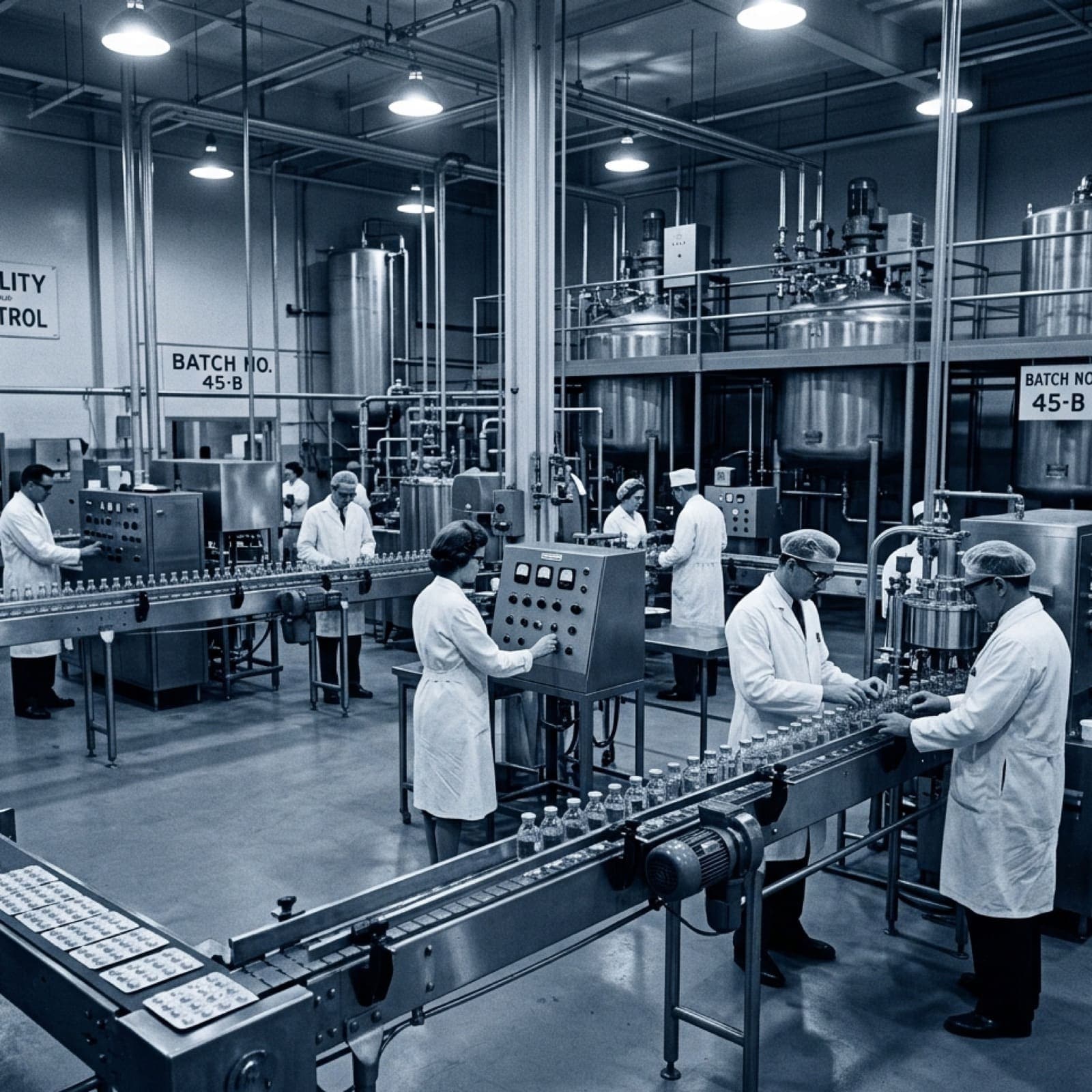
Image notice: The images on this page were generated using artificial intelligence. They do not depict real people, places, or events.